Written by Lucy Johnson.
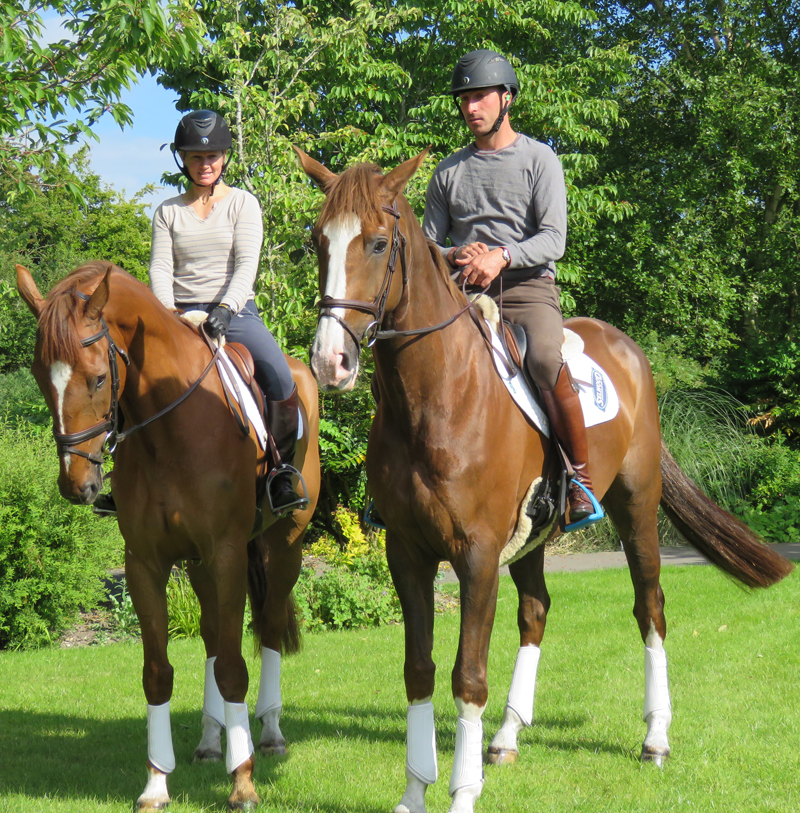
 Jesse Campbell with KaapachinoMarlborough-based event rider Jesse Campbell dominated at the inaugural Drishane Castle International Horse Trials at Millstreet in County Cork where he won both the CIC3* riding Kaapachino and the CIC2* on Cleveland.
Jesse, who is a member of New Zealand Eventing's high performance accelerator squad, won the Noel C Duggan Engineering CIC3* on a score of 44.3 penalties.
Then on a score of 44.7, Jesse also landed the Eventing Ireland CIC2* riding the Dutch Warmblood gelding Cleveland, an eight-year-old by the thoroughbred stallion Watermill Swatch who stands at Loughrea.
The 26-year-old, who celebrated his birthday during the event, said: “It was an incredible venue where the Duggan family had made every effort to make it a superb event. Everything was fantastic, from the facilities to the Mike Etherington-Smith designed cross-country courses, which were stunning. They even amended the schedule so that we were able to catch our ferry in time back to England.”
Kaapachino is a 13-year-old New Zealand thoroughbred that Jesse purchased as a six-year-old and then exported him from New Zealand when he relocated to England in 2010. “He’s my best friend. He’s not the most talented but he always gives me everything and tries so hard. It’s an incredible feeling and he does that every time.”
The pair competed in their first four star at Luhmuhlen earlier this year where they were well placed in the top ten after the dressage and show jumping but slipped down a few places following the final phase of showjumping.
Jesse said: “It's sometimes difficult for these thoroughbreds to showjump well after cross country, but at Millstreet, he showjumped a beautiful clear first before going out and really enjoying himself across country.”
Cleveland franked the popular belief that he is the next superstar for team New Zealand after a faultless display gave them their second two star win this season. “He won at Barbury and then went to Camphire where he finished third in a very competitive class. He’s an incredible horse with a very exciting future,” said Jesse.
More international travels are in prospect for the New Zealander before the eventing season draws to a close with Kaapachino heading to Pau in France at the end of October and Amsterdam, another exciting horse, competing at Boekelo in Germany.
Jesse Campbell is based at Ogbourne Maizey.
Print
Email
Written by Tony Millett.
 Three of Greatwood's successful GET GOING students Greatwood - the charity at Clench Common which looks after retired racehorses and uses them to help disadvantaged young people - is also an accredited centre for introducing young people to the skills needed for jobs in the various parts of the equine industry.
Last week all the students taking their 1st4sport Get Going educational programme passed the one-week intensive course which gives them an entry level award in 'Assisting with basic care of horses'.
Among the successful students was a nineteen year-old refugee from war-torn Sudan who came to Britain four years ago and now wants to start a career in the racing industry. Another student found that being around horses helped alleviate her medical condition - and for the first time in four years she spent the week without taking pain-killers.
These courses are designed to help young and unemployed people to get on the jobs ladder - and they are also helping with the racing industry's shortage of stable staff.
The need to help the young unemployed is a given in these economic times, but the shortage of stable staff is a newer problem. It has been fuelled by new Home Office rules on entry for experienced work-riders from the Middle East and southern Asia who are favoured by some trainers.
Earlier this month a million pounds from the proceeds of the sale of the publicly-owned Tote to Betfred has been provided to help develop the racing industry's workforce and improve staff retention.
It is estimated that there are currently 500 vacancies in training yards across Britain. And the situation is likely to get worse as the industry expects a thousand more horses will be in training by 2020.
The course run at Greatwood is the '1st4sport Entry Level Award in Assisting with Basic Care of Horses (Entry 2) (QCF)’. It is designed to benefit learners through an introduction to horse care for people who have an interest in horses and may want to work with them, but who have little previous experience.
The award gives the learner the basic skills and knowledge required to assist with caring for horses under supervision and prepares them for further training.
The intensive course includes a ‘field trip’ to a racing yard, talks from industry guest speakers and a veterinary and farrier demonstration. This qualification is run in partnership with the British Horseracing Authority.
The Get Going programme receives no direct funding from the local authority and is not currently eligible for funding from the Skills Funding Agency. Due to the economic and social circumstances of students attending Greatwood, places on the Get Going programme are offered free of charge to the young people and funding comes via grants from trusts and foundations.
It costs Greatwood over £500,000 each year to support up to 60 ex-racehorses and deliver education to 300 disadvantaged young people. The charity relies heavily on the support and generosity of the racing industry as well as the general public - with fund-raising efforts throughout the year.
Print
Email
Written by Tony Millett.
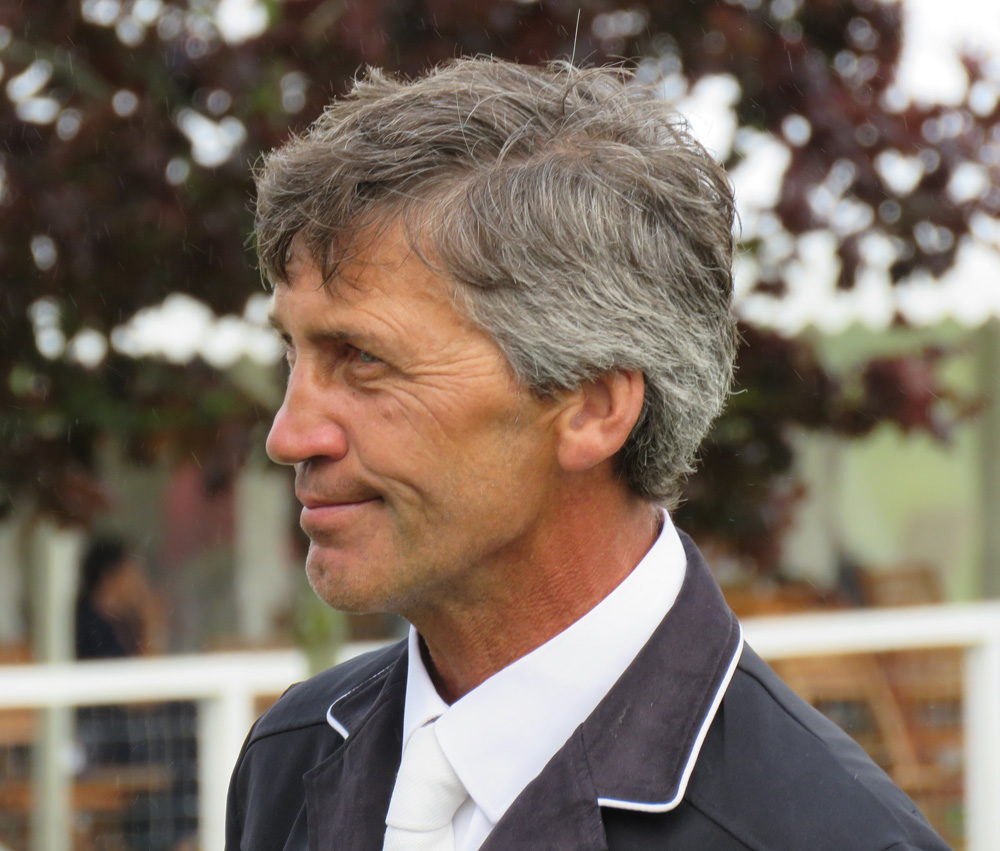 Andrew Nicholson at Barbury - July 2015New Zealand eventer Andrew Nicholson, who is based at Lockeridge, has issued a statement about his progress after surgery following a fall at Gatcombe Park's Festival of British Eventing on August 9.
Nicholson says that he is "extremely fortunate" not have suffered paralysis from the injury to his neck. He says he will not be riding again this season.
This is his statement in full: "I am very pleased to be back at home and wanted to take the opportunity to thank everyone myself for their kind messages and support which have meant a lot to me and my family.
In terms of my injury I realise I have been incredibly lucky.
My surgeon, Mr Jeremy Reynolds, told me that the injury I sustained to my neck would have caused paralysis at the time of injury, in 98% of cases. I was extremely fortunate this did not happen.
I underwent an eight hour operation where they repaired the fractures and stabilised my cervical spine. This procedure in itself was not without risk, and I cannot thank enough, the team of spinal surgeons at the John Radcliffe hospital, for what they have done.
Obviously I won't be riding again this season as it will take some time to fully recover. Whilst I have to take things easy, I am up and about and fully mobile, and look forward to getting back to full fitness in due course.
Thank you in advance for allowing my family and I some privacy and time to rest and recover.”
Riding Cillnabradden Evo, Nicholson fell at the very last fence on the cross-country course. Cillnabradden Evo was not injured in the fall
Nicholson had already withdrawn his two top horses Avebury and Nereo, from the cross-country phase of Gatcombe's British Open Championship. They were both entered for the prestigious Land Rover Burghley Horse Trials (September 3-6.)
It was hoped that Nicholson and Avebury would win the Burghley CCI 4* title for a fourth successive year - topping his four wins in a row at the St James's Place Barbury International Horse Trials CCI 3* event.
Print
Email
Written by Our Special Correspondent.
 For the last meeting of its short summer season (June to August), Le Dorat's racecourse - known as the 'Hippodrome de la Sagne' - had a full card of seven flat, trotting and cross country races and a good-sized crowd enjoying a sunny August Saturday.
Racing in the Basse-Marche area of Haute Vienne in this north-west corner of the Limousin region, is an informal affair. It looks much like a village fete - with lunches served, picnics encouraged and a whopping bouncy castle as well as miniature ponies to keep the children happy.
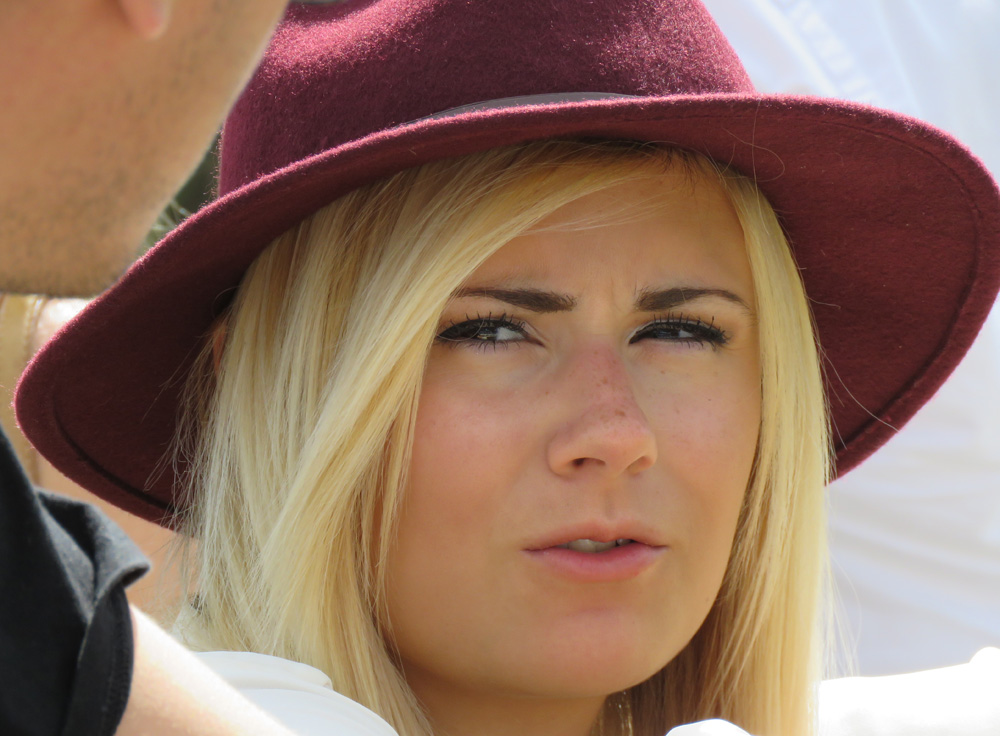 Stylish hat...It is not racing in the style of Deauville or Longchamp, but the competition is in deadly earnest.
However there one or two race-goers out to cut a stylish dash.
The first trotting race - known elsewhere as 'harness racing' with horse, driver and a two-wheeled 'sulky' - ended with a voluble complaint that the first horse over the line had broken into a gallop.

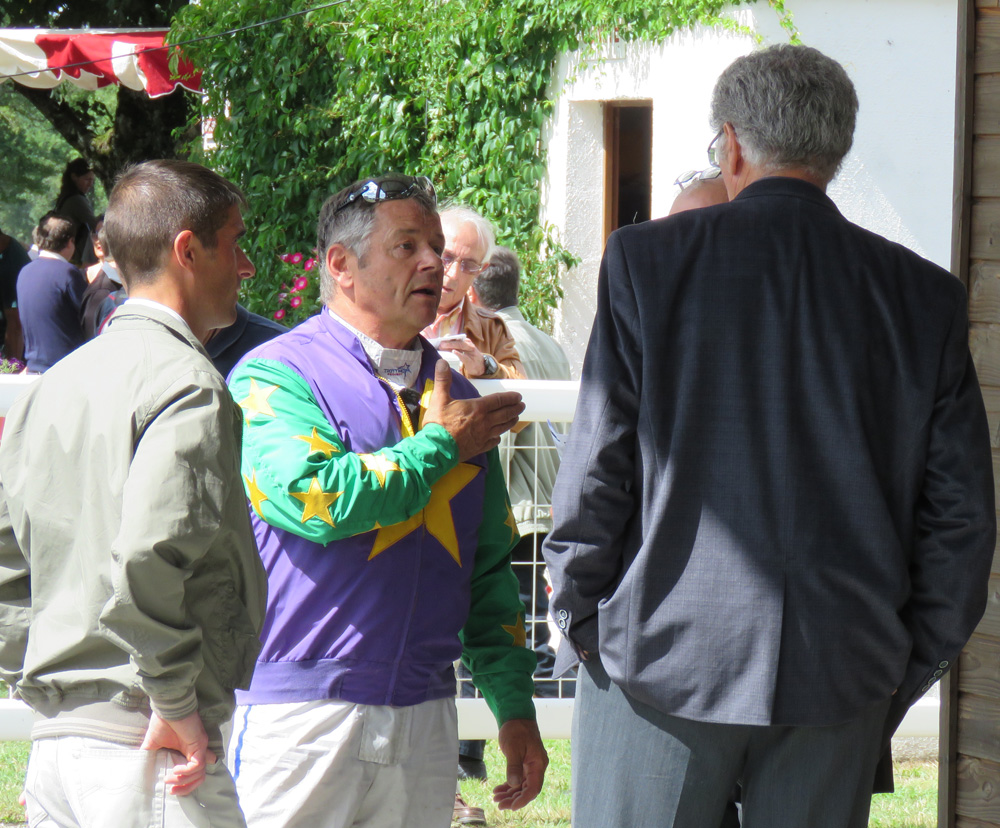 Gallop? Moi?Discussion of the complaint was continued behind closed doors and the horse and driver were disqualified - much to the disappointment of those who had backed them. Later the driver concerned was seen in animated discussion with officials - to no avail.
The course has two buildings for pool betting - that's a similar way of betting to our tote system. Not all the machines - which looked about 1970 vintage - worked all the time, which gave rise to some worried queues as start-times got nearer.
The minimum stake was two euros and only the oldest and most seasoned experts seemed to be taking away rolls of notes. They had got to grips with the complexities of the 'trio' and 'le pari couplé' as well as the beginners' 'le pari simple'.

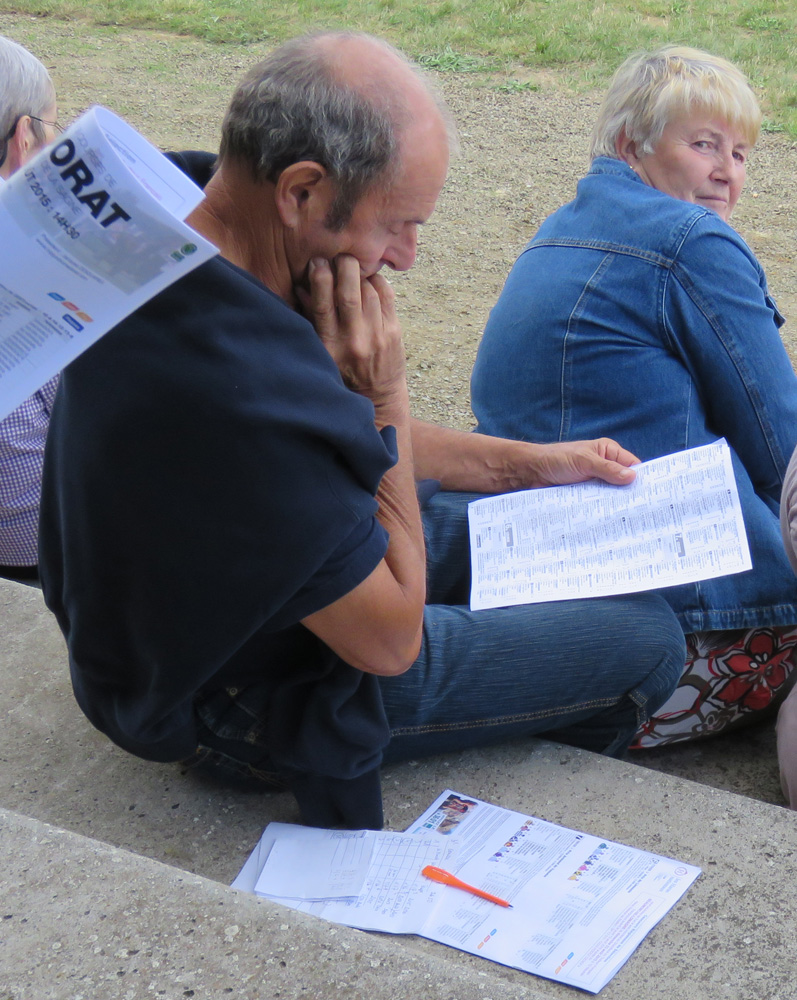 Puzzling out the form
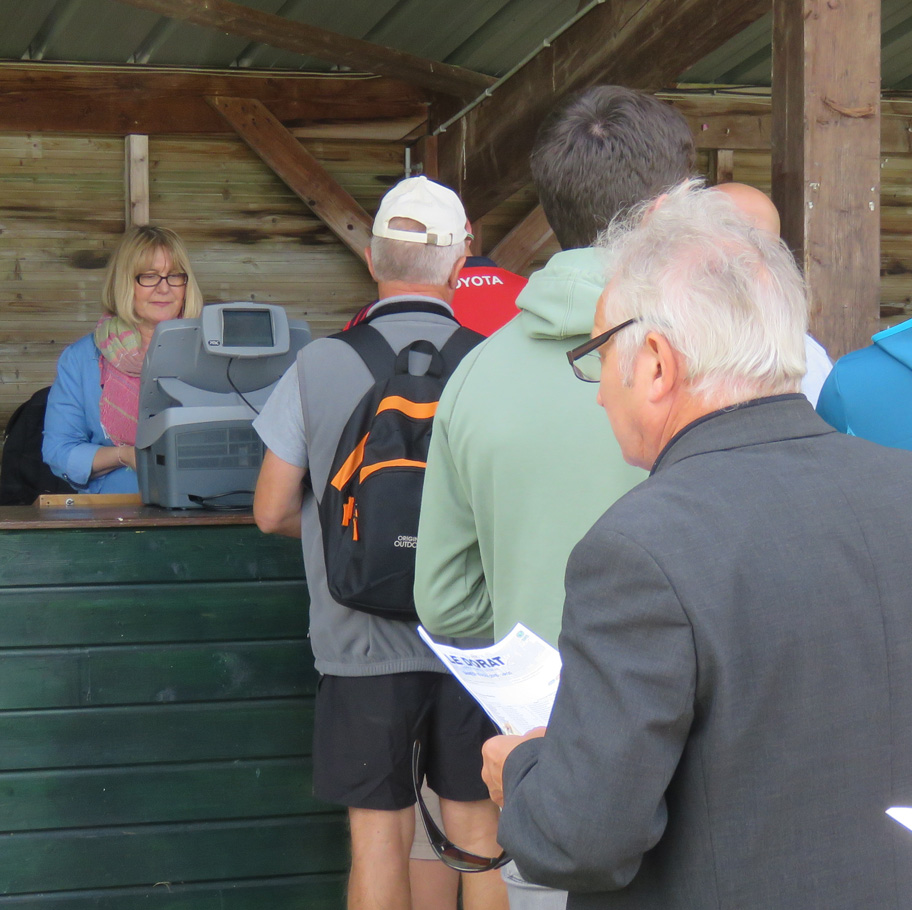 Queueing to lay a betThe Haute-Vienne has had a very hot, very dry summer. There is a hosepipe ban in force. The grain harvest was over by the end of July and the maize crop is well below its normal growth and there are worries abroad about feed for the cattle when winter comes.
However, a recent over-night storm and a day of dawn-to-dusk downpours had freshened the grass and eased the ground. So the cross-country races over steeplechase fences could go ahead.
Entry to the course for adults was six euros with a free race card - and the chance to spend one euro more on a form guide. And there was a free leaflet explaining the card, form and technical terms. It was, of course, in French - and even the 'le langage des courses' feature on technical terms challenged our French.
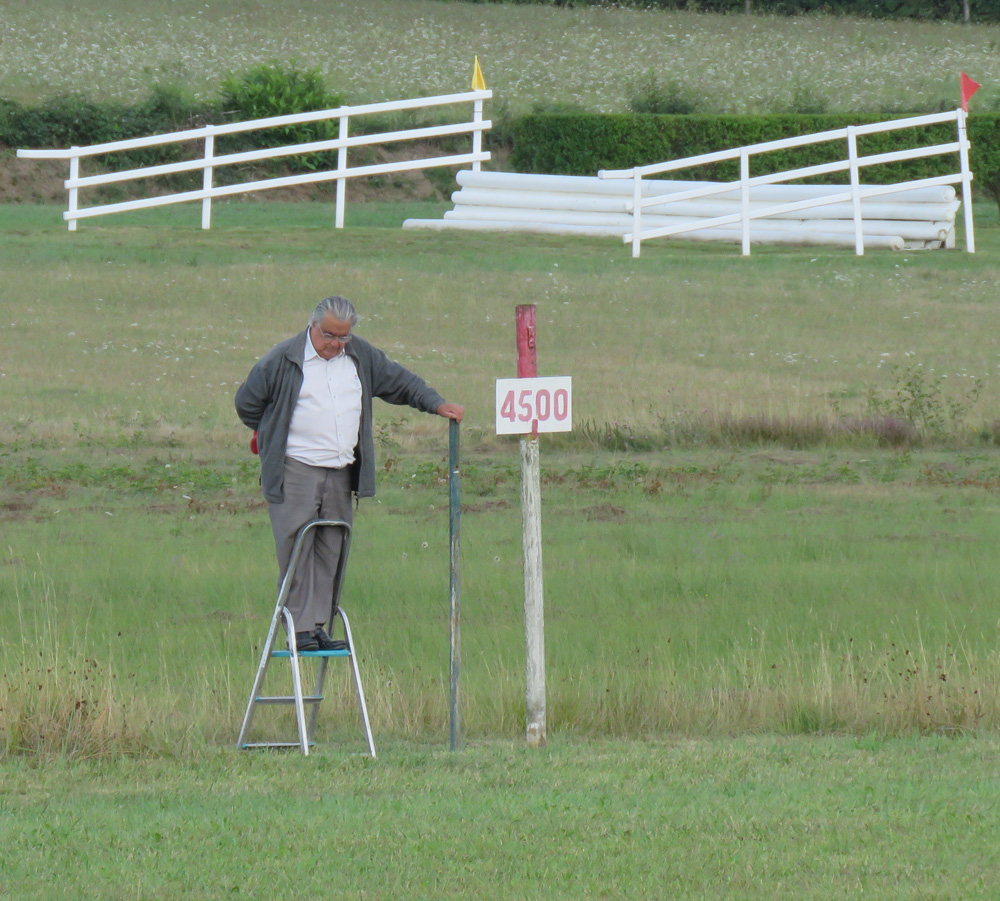 The starter
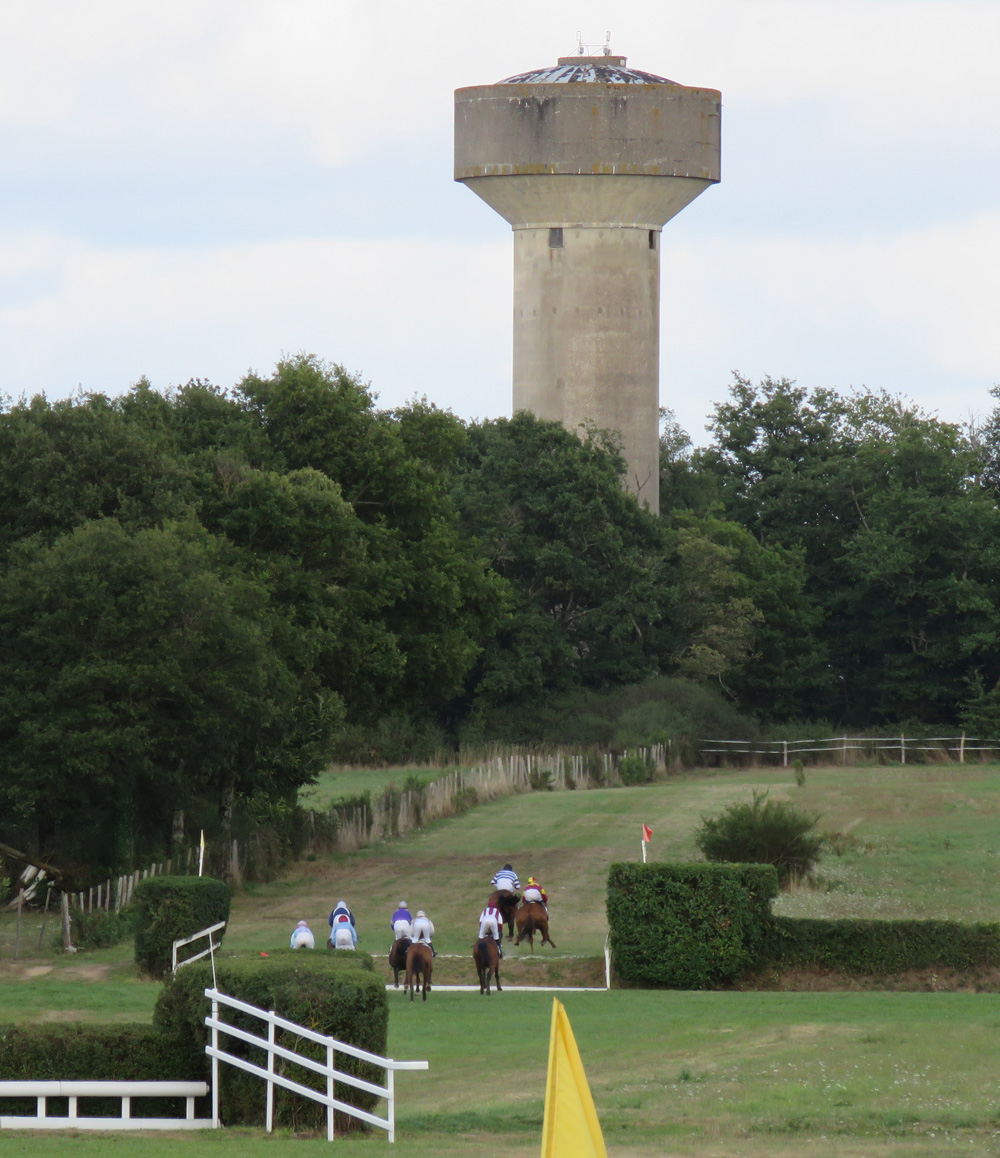 The climbThe last race - the Prix Armand de Vasselot at 6.30 pm - was the longest cross country event on the card: all of 4,500 metres with a great variety of obstacles including a tricky bank between two fences that looked more like a 'sleeping gendarme'.
Two miles with the hill up toward the water tower taken twice was quite a task for the field of seven geldings and one mare - all five years-old and above.
The starter carried his step-ladder out to the starting line - which was right in front of the crowds. Having taken their mounts to inspect several of the fences, the jockeys rode up towards the start.
Then three of the field took off without a by-your-leave - luckily the starter was just far enough away from the crowds so we could not hear his language as he called them back. In fact they were stopped quite efficiently by a steward with the appropriate white flag just a hundred metres along the track.
It was a tough race and the relative outsider, eight year-old Tamara du Granit under Marc-Antoine Billard just held on to win. The American-bred gelding looked pretty fresh as he arrived back to the ring to be checked by the vet.
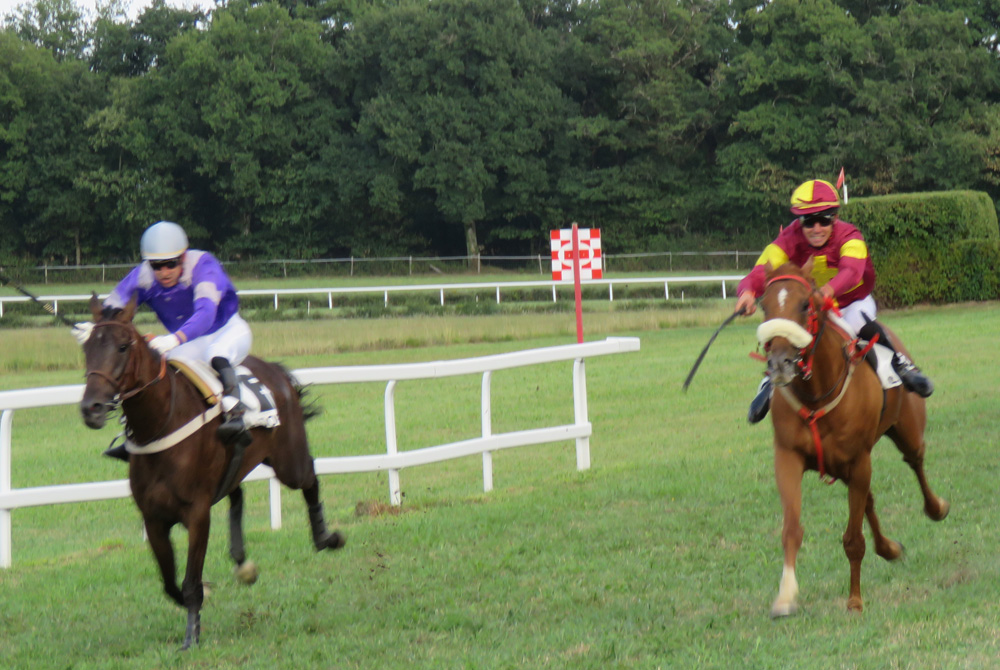 The winner's on the right

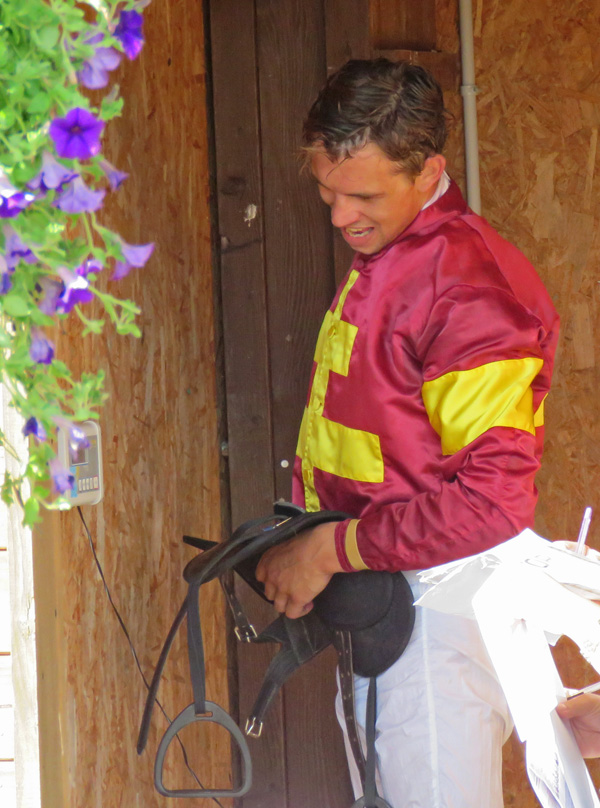 Weighing in As at the best racecourses, jockey Marc-Antoine Billard gave a quick post-race interview before weighing-in. As the crowd dispersed calmly to towards the car park, there were not many people staying around to collect their winnings.
The biggest gamble of the day had been in the other cross-country race - the Prix de Bellefon. Facing the 4,000 metre course was the previously un-raced Alloue de Kerser ridden by Céline Picard.
In the parade ring this French-bred mare looked like an easy winner. A fine horse in good trim and seemingly ready for the off. It was not to be.
She came in last by a good few lengths - gently jeered at by a crowd of disappointed punters among them some visitors from Britain!
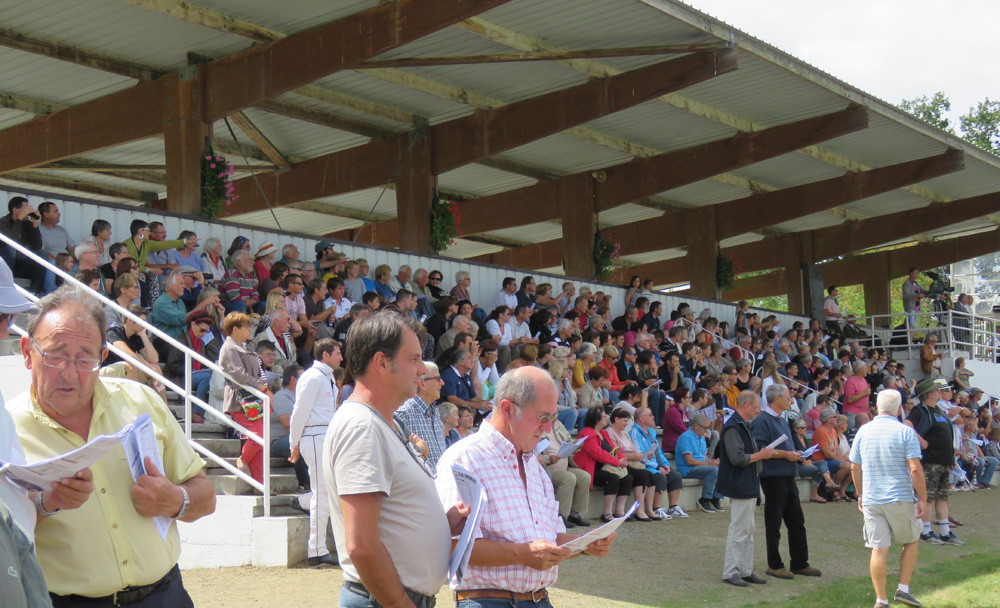 Le Dorat's grandstand
Print
Email






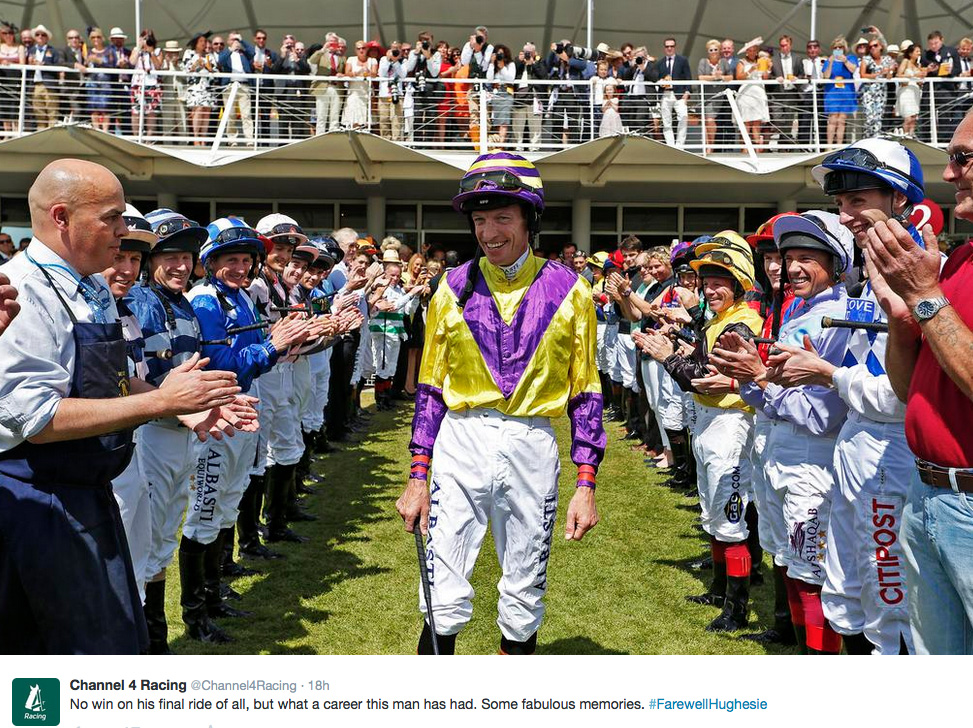
![Channel 4 Racing's tweet [Click to enlarge]](/images/images/Equestrian_-_Horsebox/RICHARD_HUGHES_/C4_RACING_AP_ON_HUGHESIE.jpg)